

Drop-In Lithium Power for the Full GSE Fleet
ENEROC USA designs and builds drop-in lithium battery replacements for the full range of electric ground support equipment operating at commercial airports, cargo hubs, and private aviation facilities across North America.
Powered by CATL Technology
Ground support operations run on tight turnarounds, unpredictable weather, and zero tolerance for equipment failure. Baggage tractors, belt loaders, and pushback tugs need power that performs on the ramp at 5 AM in January as reliably as it does on a July afternoon. ENEROC lithium-ion (LFP) batteries, powered by CATL's world-leading cell technology, are built for exactly that environment: sealed against the elements, maintenance-free, and engineered to deliver consistent runtime across every shift, every season.
Compatible GSE Equipment Types
Baggage Tractors
Electric tow tractors for moving baggage carts and ground equipment between aircraft and terminals.
Belt Loaders
Electric conveyor vehicles for loading and unloading baggage directly into aircraft holds.
Pushback Tugs
Electric aircraft tow tractors for pushing back narrow- and wide-body aircraft from gates.
Catering Trucks and Cabin Service Vehicles
Electric elevated service vehicles for aircraft catering, cleaning, and cabin preparation.
Ground Power Units
Electric ground power units providing aircraft power during ground stops.
Maintenance and Access Platforms
Electric elevated work platforms for aircraft maintenance and fueling operations.
Passenger Buses and Apron Vehicles
Electric airside transport vehicles for crew and passenger transfer.

The Case for Switching: Lithium vs. Lead-Acid and Diesel/Propane
Most GSE fleets run on one of three power sources: electric batteries, diesel, or propane.
Replacing Lead-Acid with Lithium Batteries. Lower TCO, Zero Maintenance
Lead-acid batteries are the legacy standard for electric GSE, and their limitations are well understood by every ground handler. Daily watering, charge equalization cycles, acid handling, ventilated charging areas, and replacement every 1-3 years add up to a substantial and recurring cost burden. ENEROC LFP batteries require none of it. Zero watering. Zero equalization. Zero acid handling. And with a 4,000+ cycle, 12-year useful life (three to four times the lifespan of lead-acid) the Total Cost of Ownership advantage is significant across any fleet of any meaningful size.
Replacing Diesel and Propane: Rising Fuel Costs, Eliminated
Diesel and propane GSE have a different problem: fuel. As aviation fuel costs continue to rise, so does the cost of running ICE-powered ground equipment. Diesel and propane engines also require regular servicing (oil changes, filter replacements, engine inspections) and produce emissions that affect ramp air quality and create compliance exposure under increasingly strict airport environmental standards. Electric GSE powered by ENEROC lithium batteries eliminates fuel costs entirely. No diesel. No propane. No engine servicing. The only input is electricity, priced at a fraction of liquid fuel per equivalent unit of work, and available at every airport gate and ground power point. For fleets converting from diesel or propane, the operating cost reduction is immediate and measurable from the first month of operation.

LFP vs. Lead-Acid vs. Diesel/Propane
Feature | Lead-Acid Batteries | Diesel / Propane | ENEROC by CATL LFP |
|---|---|---|---|
Fuel / Energy Cost | Moderate cost - Electricity (less inefficient) | High cost (rising fuel prices) | Lowest cost - Electricity (highly efficient) |
Maintenance | High (watering, acid, equalization) | High (engine servicing) | Zero daily maintenance |
Emissions | Acid fumes during charging | CO₂, NOₓ, particulates on ramp | Zero (fully electric) |
Lifespan | ~1,500 cycles / 3–5 years | Engine-dependent | 4,000+ cycles / 12 years |
Opportunity Charging | Not supported | Refueling required | Charge any time, any amount |
Cold Weather Performance | Significant capacity loss | Starting issues below -15°C | Integrated heating; rated to -40°C |
Total Cost of Ownership | Moderate-high | High (fuel + servicing) | 2–4x lower than lead-acid |
THE ENEROC EDGE
Next-Level Technology and Support
CATL Cells
Latest-generation LFP cells for unmatched energy density, thermal stability, and long cycle life.
6-Year Warranty
Industry-leading comprehensive warranty on every battery.
Integrated Cell Heating
Factory-installed heating systems for full rated performance at temperatures as low as -40°C.
US-Based Support
Local technical teams and parts inventory for rapid on-site response. No international lead times.
Advanced Smart BMS
Real-time cell diagnostics, CAN communication, and optional 4G cloud connectivity for remote fleet monitoring.
Drop-In Design
Engineered to BCI standards and custom voltage configurations for seamless integration with all major GSE OEM platforms. No rewiring, no structural modification.
IP67-Rated Sealed Enclosures
Dust and water-jet protection rated for outdoor ramp environments, condensation cycling, and jet blast exposure.
Built for the Ramp: All-Weather, All-Season Performance
The airport ramp is one of the harshest operating environments for any battery. Equipment moves constantly between heated terminal areas and open tarmac, exposed to rain, snow, jet blast, freezing temperatures, and summer heat. Standard batteries, including many lithium systems not designed for this application, degrade rapidly under these conditions.
ENEROC GSE batteries are engineered specifically for ramp environments:
Integrated Battery Heating
ENEROC GSE batteries include integrated heating systems, ensuring full rated capacity and reliable operation even at -40°F. On a pre-dawn winter ramp, the battery is ready when the crew is.
All-Weather Battery Case
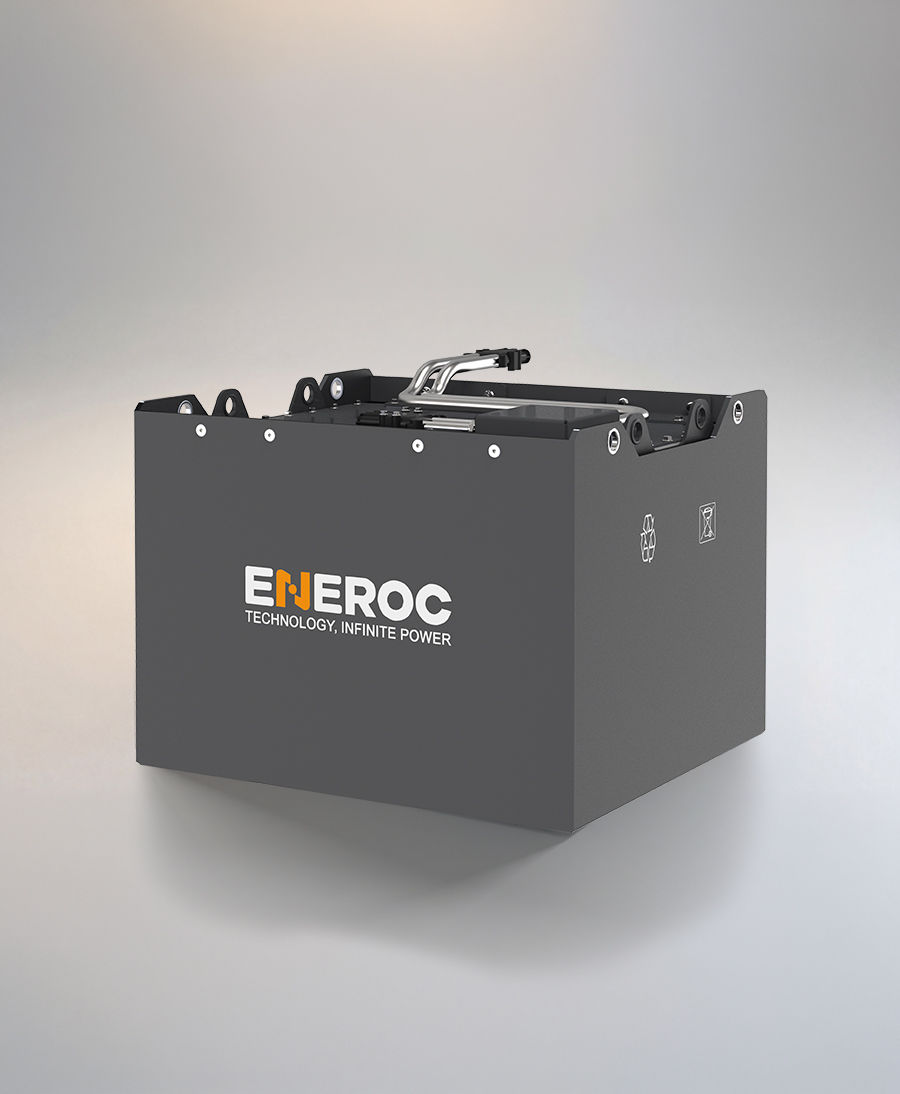
ENEROC GSE batteries are housed in rugged, fully sealed enclosures rated to IP67 and are protected against dust ingress, rain, and water jets.
Sealed Against Condensation
GSE equipment cycles constantly between outdoors and indoors, creating condensation which may cause electrical shorts and corrosion. ENEROC's fully sealed enclosure design eliminates this risk.
Vibration-Rated Construction
ENEROC batteries are engineered to withstand sustained vibration without loosening connections, damaging cells, or compromising BMS integrity, failure modes common in batteries originally designed for indoor use.

Total Cost of Ownership: The Financial Case for ENEROC
The cost of powering a GSE fleet is not the purchase price of the battery. It is the sum of energy costs, maintenance labor, downtime, and replacement frequency over the life of the equipment. Across every one of these categories, ENEROC LFP batteries deliver a materially lower cost than lead-acid, diesel, or propane alternatives.
Zero maintenance labor
No watering, no equalization, no acid handling, no scheduled battery servicing.
Lower energy cost
LFP batteries charge at high efficiency with minimal energy waste; lower electricity spend per vehicle per shift than lead-acid charging losses or diesel/propane fuel.
3-4X longer lifespan
4,000+ cycles and 12-year design life vs. 1,500 cycles and 1–3 years for lead-acid. Fewer replacements. Lower capital expenditure over the fleet lifecycle.
No downtime with opportunity charging
Charge between shifts, or whenever the vehicle is idle. No scheduled 8-hour charging windows. No vehicle out of service waiting for a full charge.
No fuel infrastructure
No diesel storage, no propane handling, no fuel delivery scheduling. Eliminates associated compliance, safety, and logistics costs entirely.
Frequently Asked Questions
ENEROC batteries are compatible with the full range of electric and electrified GSE, including baggage tractors, belt loaders, pushback tugs, catering trucks, cabin service vehicles, electric ground power units, maintenance platforms, and airside passenger transport vehicles. Multiple voltage configurations (24V–500V) and custom enclosure options cover light-duty to heavy-duty applications.
ENEROC LFP batteries deliver 2–4 times lower Total Cost of Ownership than lead-acid over the battery's lifetime. The savings come from zero maintenance labor, higher charging efficiency (lower electricity cost per cycle), and a 3–4 times longer service life — 4,000+ cycles vs. approximately 1,500 for lead-acid. Fewer replacements and eliminated maintenance programs translate directly to lower fleet operating costs.
Diesel and propane fuel costs are a recurring and rising operational expense, compounded by engine maintenance (oil, filters, inspections) and increasingly strict airport emissions compliance requirements. ENEROC electric GSE eliminates fuel costs entirely, replacing them with electricity at a significantly lower cost per unit of work. Engine servicing is eliminated. Emissions compliance risk is removed. For high-utilization fleets, the operating cost reduction is measurable from the first month.
ENEROC GSE batteries include integrated cell heating systems that maintain optimal operating temperature in cold conditions, delivering full rated capacity and reliable starts at temperatures as low as -40°C. Lead-acid batteries lose 30–50% of usable capacity below 0°C. ENEROC LFP batteries with integrated heating do not suffer this performance degradation, critical for winter operations.
ENEROC GSE batteries are housed in IP67-rated sealed enclosures, protecting against dust, water jets, rain, and the condensation that forms when equipment cycles between cold outdoor ramps and warm indoor facilities. The sealing eliminates moisture ingress that corrodes terminals and causes electrical failures in non-rated enclosures, a common failure mode for warehouse-grade batteries repurposed for ramp use.
Yes. Opportunity charging is one of the most operationally significant advantages of ENEROC LFP over lead-acid. Plug in during gate turns, between shifts, or whenever the vehicle is idle, for any duration. There is no minimum charge time, no damage from partial cycles, and no requirement for a full 8-hour charge window. For high-frequency GSE operations with short ground times, this flexibility is essential.
Yes. ENEROC batteries are designed and built to match the dimensional and voltage specifications of the original lead-acid battery, enabling installation into existing GSE vehicles across North America without rewiring or structural modification. Custom steel enclosures replicate the physical footprint and weight distribution of the lead-acid system being replaced.
Every ENEROC battery comes with an industry-leading 6-year comprehensive warranty, backed by US-based technical support and local parts inventory for rapid on-site response.
Upgrade Your Ground Fleet
Request a Free Consultation
News and Blog

80 Programs, 32 Jurisdictions: The Incentive Map for Electric Forklift Fleets
ENEROC USA has published a free, searchable database of industrial EV incentive programs, which tracks over 80 active programs across 32 US jurisdictions covering electric forklifts, charging infrastructure, heavy-duty trucks, and more.

Eneroc Joins The Advanced Energy Council (AEC) as a New Member
the Advanced Energy Council was established to represent the companies that produce, implement, and support advanced energy technologies and accessories. The group was formed with the intention of being inclusive of current and future motive energy storage technologies. AEC aims to serve as the collective voice in the industry to promote innovative energy solutions and education for the market, colleagues, and end users.

ENEROC USA Joins BCI: the Association's First Lithium-Only Member in 102 Years
BCI members have traditionally focused on lead batteries, but the association increasingly includes flow, sodium, lithium-ion, and other emerging chemistries. ENEROC's arrival is a natural step in that direction and opens the door for other lithium specialists to engage with BCI's platform of advocacy, education, and industry collaboration.


